A brave new voice for all creatures, great and small.
– Latest News & Articles –
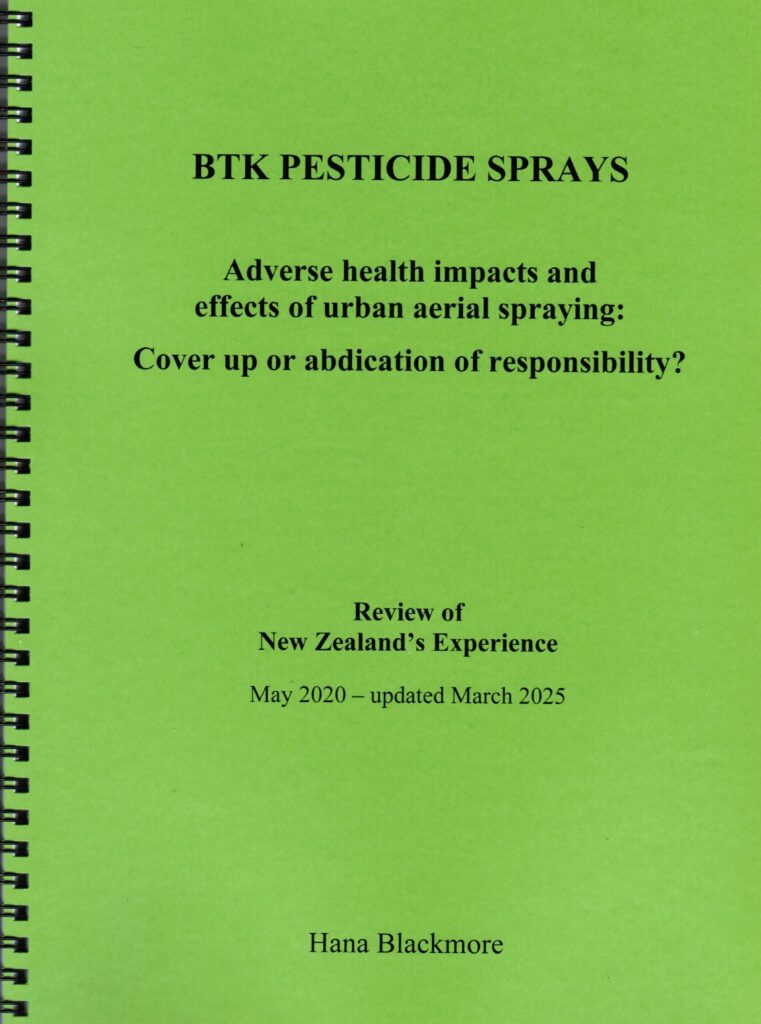
How the New Zealand government buried legitimate scientific concerns and research into the impacts of aerial spraying people with a biological pesticide. In a narrative and commentary that alternatively shocks and sobers, Hana Blackmore has laid out the story of the biosecurity campaigns using aerial pesticide spraying over cities in New Zealand.
Read the Report here on the original People’s Inquiry website: https://peoplesinquiry.co.nz
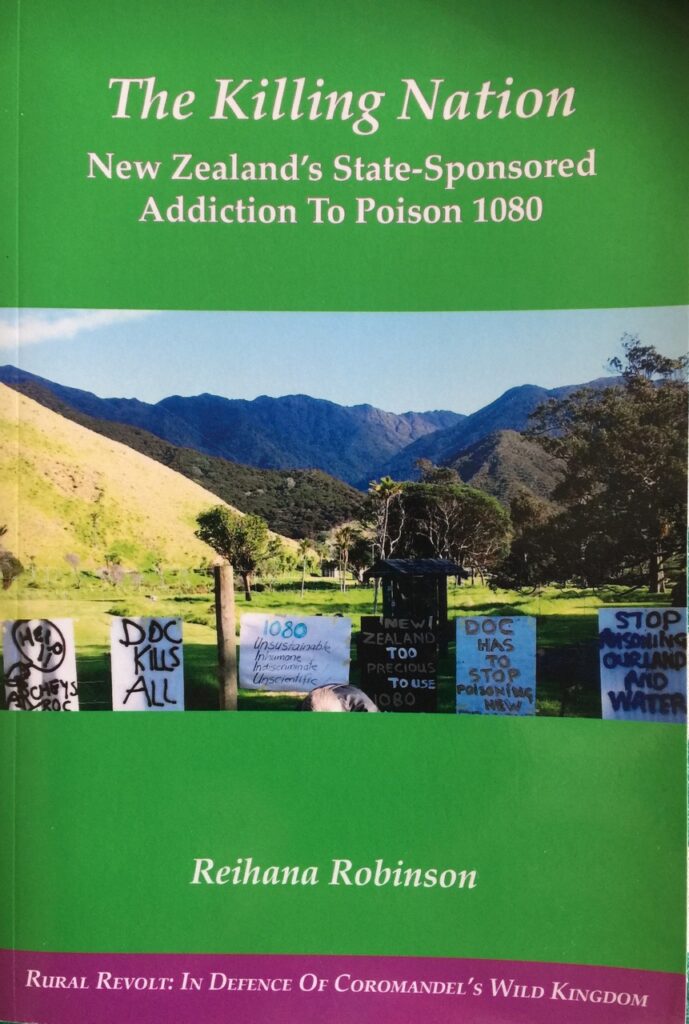
Reihana Robinson’s The Killing Nation: New Zealand’s State-Sponsored Addiction to Poison 1080 is a critical examination of New Zealand’s widespread use of 1080 poison in conservation and pest-control programmes. Drawing on environmental history, investigative research, and rural perspectives, Robinson argues that the country’s “clean green” image hides a large-scale poisoning system affecting forests, waterways, wildlife, farm animals, and rural communities.
Read The Killing Nation: New Zealand’s State Sponsored Addiction to Poison 1080.
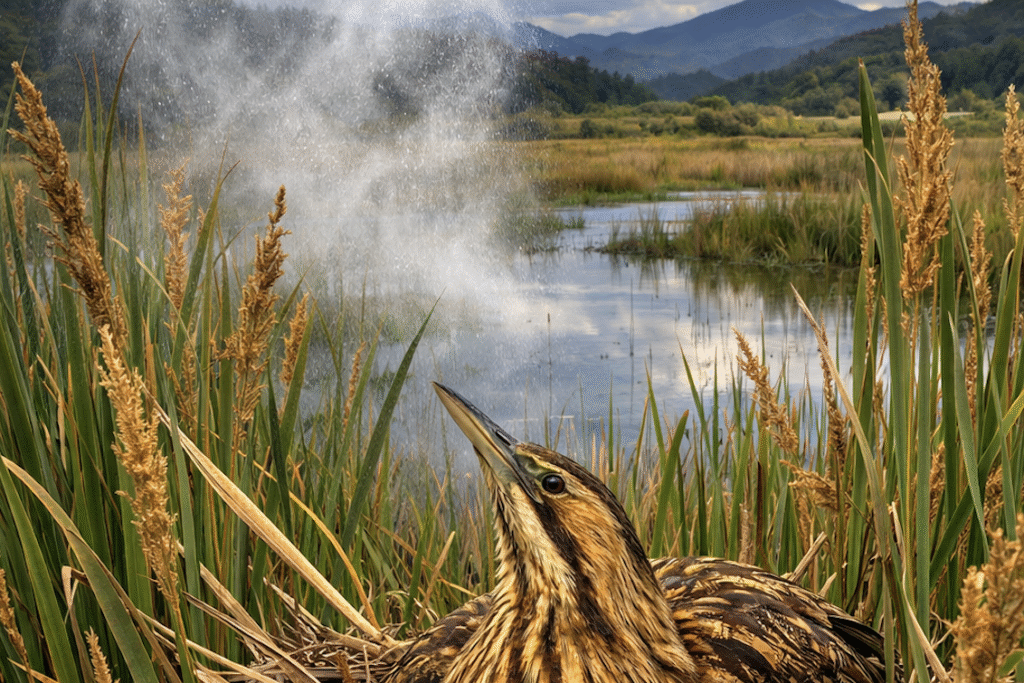
Flora and Fauna is expressing deep alarm following confirmation that aerial drone spraying of glyphosate based herbicides (GBHs) has proceeded over the nationally significant wetlands of Te Henga — despite a last-minute application to the Environment Court of New Zealand seeking to halt the operation. Read more here.
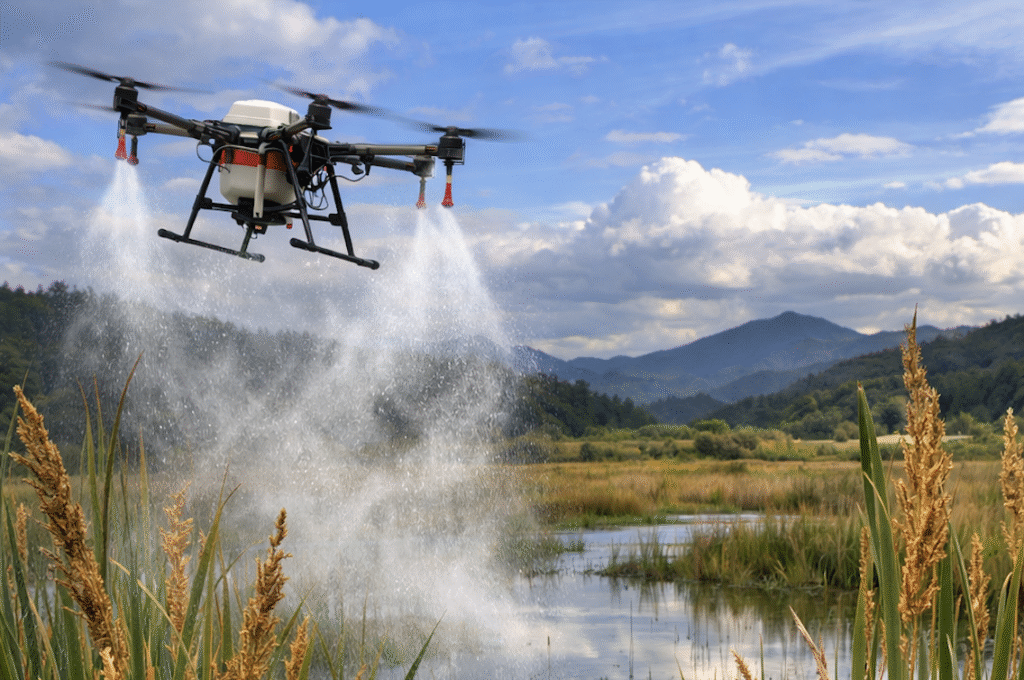
Controversial drone spray over wetland goes ahead in spite of last minute appeal to the Environment Court. “What on earth is going on, and why are the public being kept in the dark?”
Read the Weed Management Advisory Media Release here.
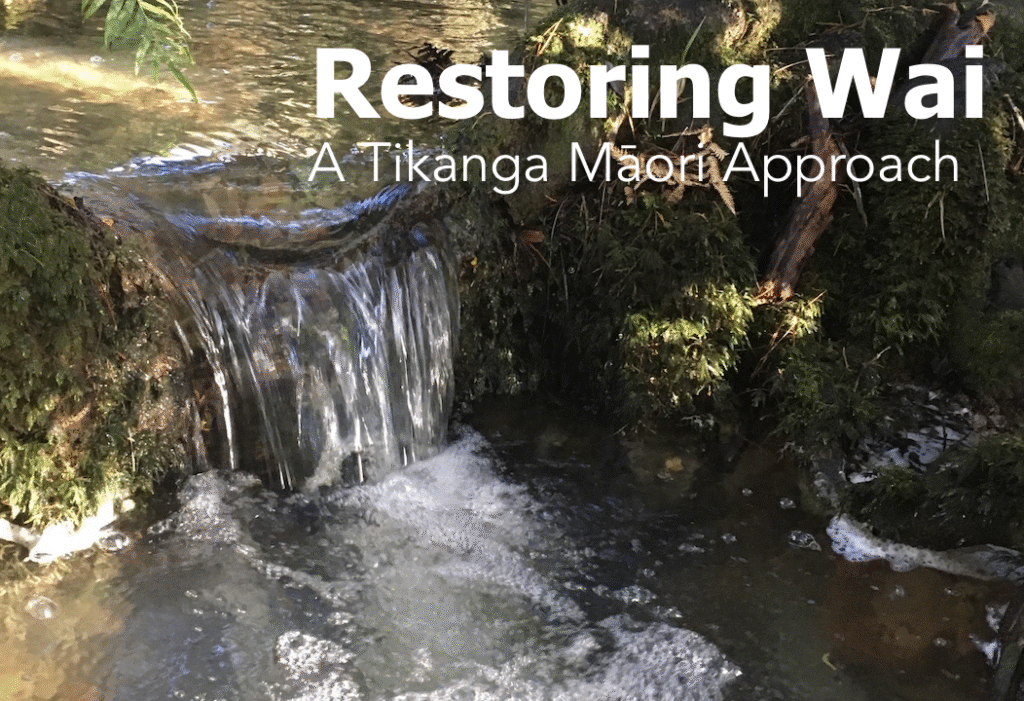
In te ao Māori, wai is not just water, it is the breath of Papatūānuku, the tears of Ranginui, and the life force that flows through every living being. To restore wai is to restore 𝗠𝗮𝘂𝗿𝗶, the vitality and spiritual essence that connects us all. This is why we do not use glyphosate or any other chemicals in our mahi. Read more here.
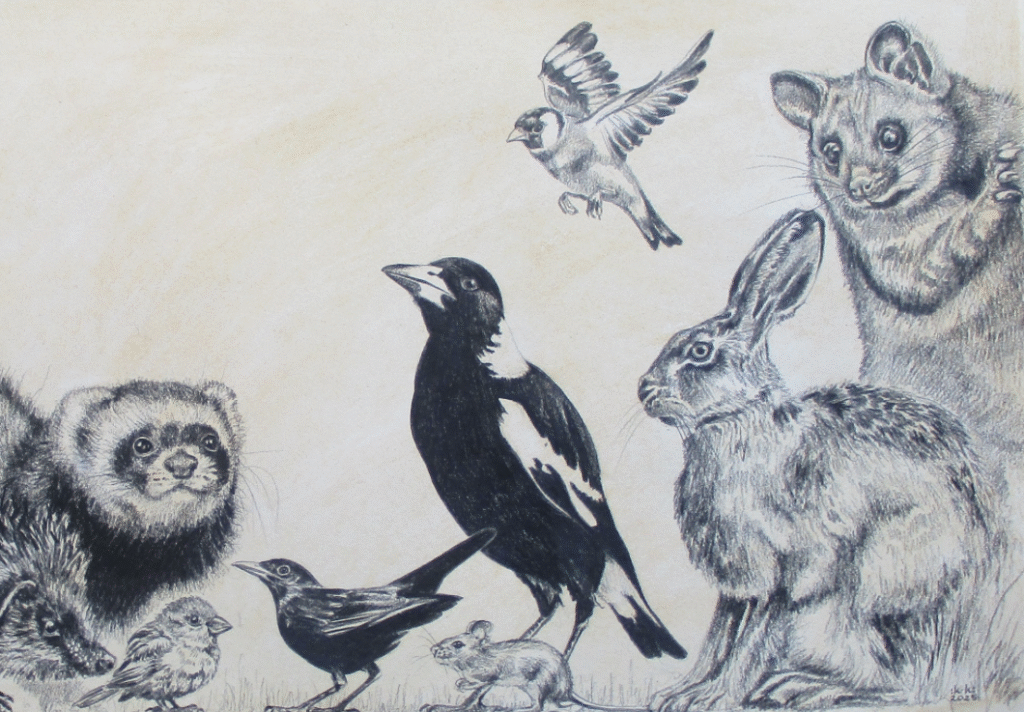
For more than a century, the dominant narrative in New Zealand has been that introduced species are ‘pests’ – invaders to be eradicated at all costs. Forest & Bird, DOC, and other agencies still promote this eradication mindset. Yet it is increasingly being questioned – after all, introduced species are now part of our landscapes, ecosystems, and cultures. They are not going away. It’s time to accept that, like us, they are here to stay.
Introduced species: why we need to rethink our relationship with them. Read the full article here.
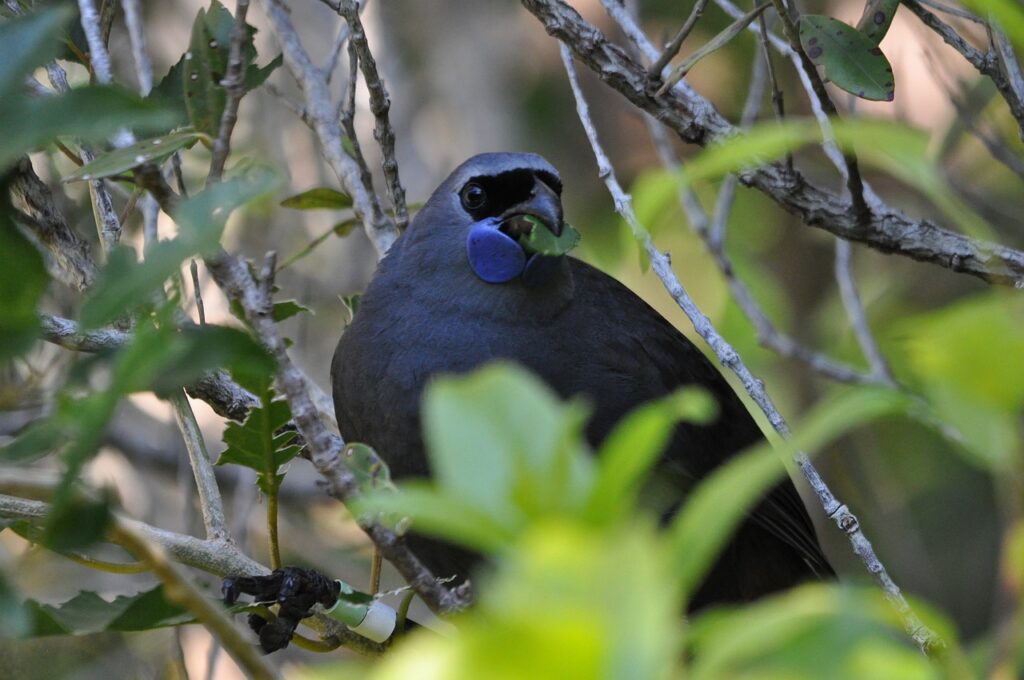
Korowai O Te Ngahere is a collaborative conservation discussion document that places emphasis on sustainable, humane and ethical approaches that do not leave residual contamination in the environment or wildlife. These approaches allow for the recovery of natural resources, support local livelihoods and help fund biodiversity care. Read more here.
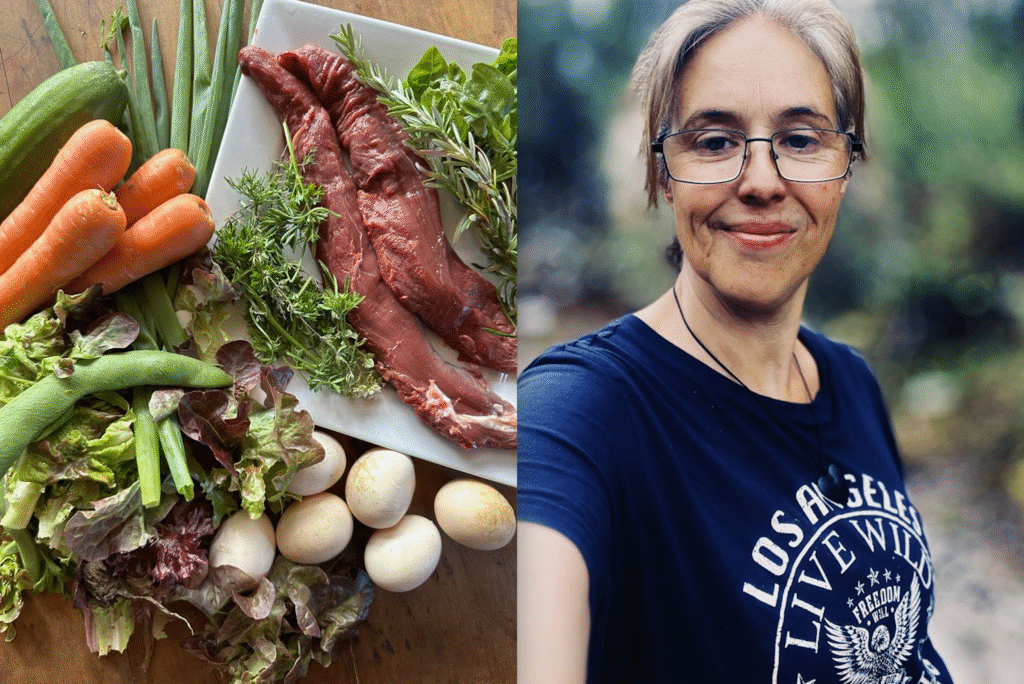
This is the speech that Averil Drake gave at the Flora and Fauna 2025 Kaitiaki Forum. She shared her powerful and heartfelt testimony of hardship through the Christchurch earthquake, the challenges of living among West Coast forests that are regularly poisoned by the Department of Conservation, and ultimately the resilience, abundance, hunting, foraging and freedom of off grid life. Read more here.
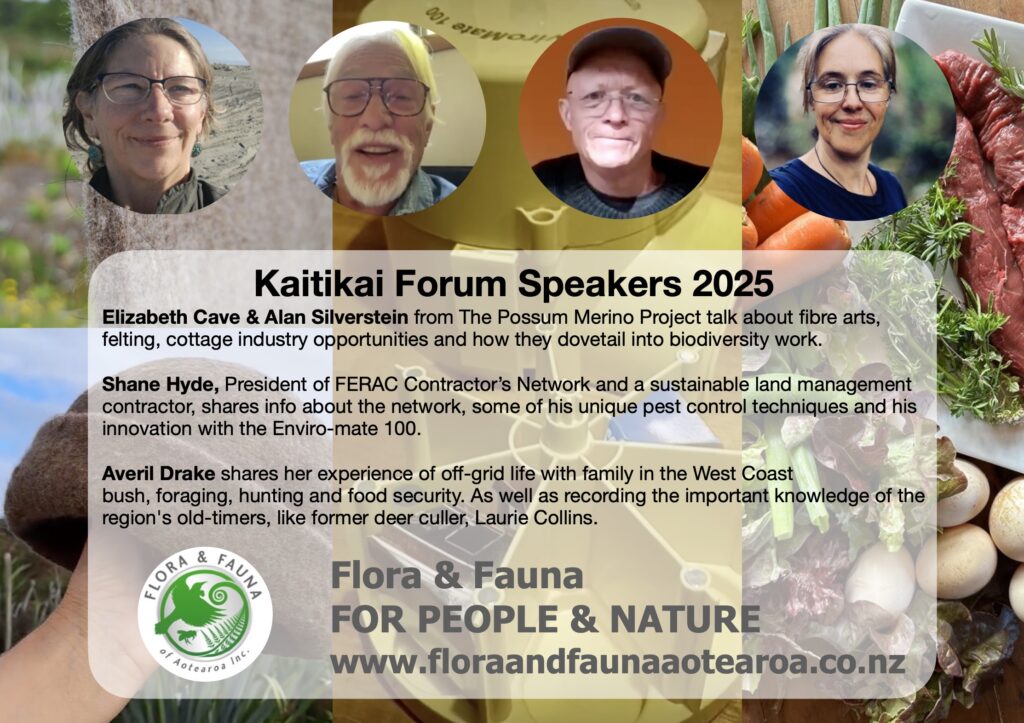
The Kaitiaki Forum invites members and other guest speakers to share the important projects they are working on for our people and environment. Watch this year’s forum here.

What are the implications of adding feral cats to the Predator Free 2050 eradication list? Read Flora and Fauna’s statement and recommendations here.
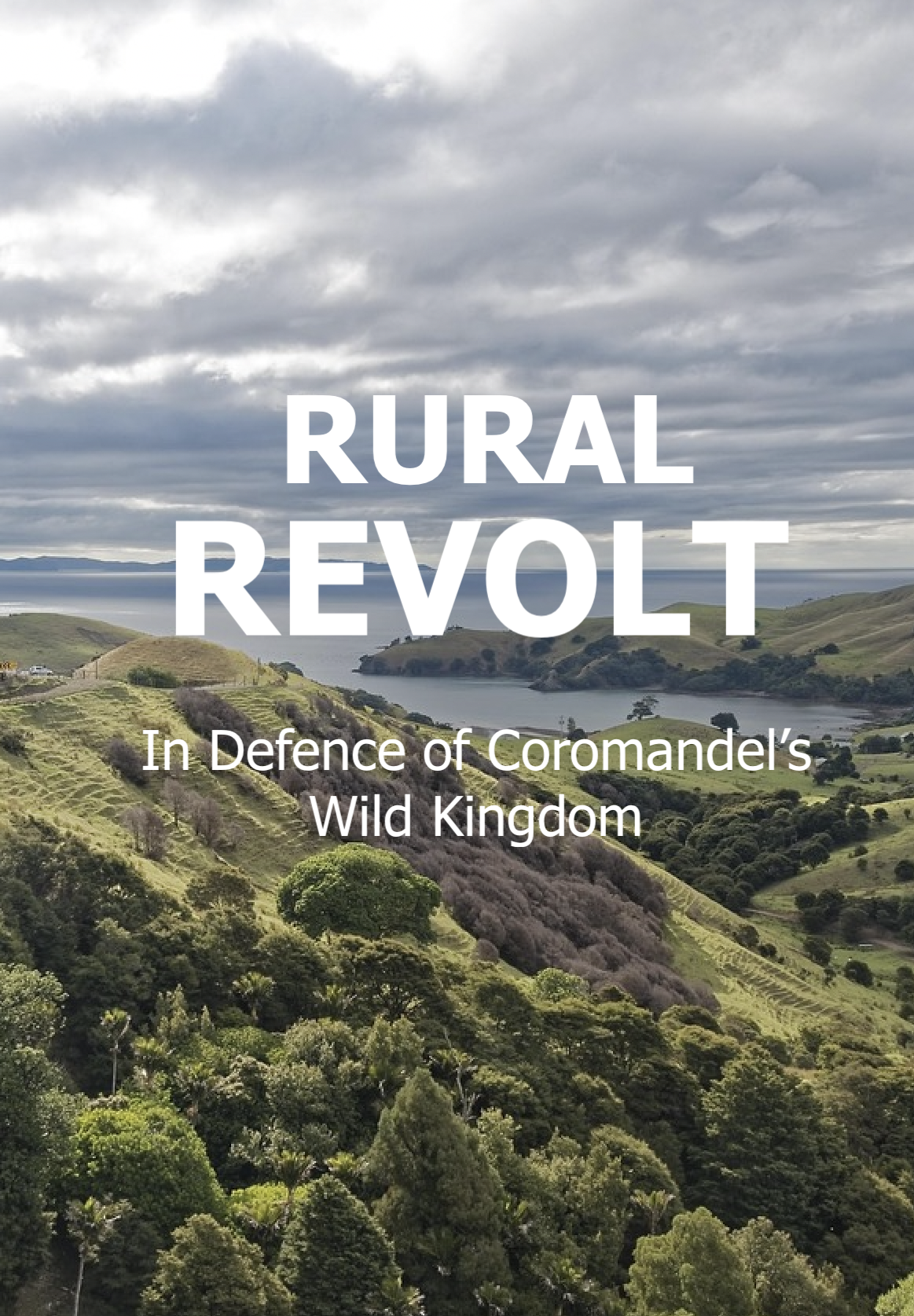
Rural Revolt In Defence of Coromandel’s Wild Kingdom by author Reihana Robinson tells the story of environmental struggles. Where big money and bureaucratic self-interest tear at the fabric of traditional rural communities and their threatened way of life. This book is the companion to The Killing Nation New Zealand’s State-Sponsored Addiction to Poison 1080 and is divided into four parts. First They Came for the Wild Goats tells of the government’s “Wall of Death” program against the feral goats. Don’t Fence Us In describes the attempt to enclose farming families and others behind a divisive “predator-proof” steel barrier. Save Our Wild Pigs exposes the stealth attack by local government to take wild pigs off the local menu. Coromandel Voices: Poison Peninsula presents the struggle for humane wild animal conservation policies. The book is set on the northern Coromandel peninsula of Aotearoa/New Zealand. The struggles are ongoing.
Read Rural Revolt here with permission of the author Reihana Robinson .
The Weed Management Advisory is an informal network of Aucklanders from across the region with an interest and expertise in environmentally sustainable and non-chemical weed management.
They aim to : Promote, encourage and support non-chemical and integrated management of weeds – consult – research – commission – report and engage in submission processes.
The Weed Management Advisory website contains a wealth of information, from studies, reports and submissions to collections of personal testimonials from people harmed by pesticides.
Read more here: www.weedmanagementadvisory.wordpress.com
The ELI is using the LAW to hold polluters to account, including government departments, councils and corporations.
“We use the power of the law to protect the natural taonga of Aotearoa. We hold polluters, corporate interests, and regulators to account.“
“Our position is that in Aotearoa New Zealand we already have laws to protect the environment, but too often these laws are ignored or poorly implemented. We’re changing that.”
Read more on their website and check out the cases they are working on.
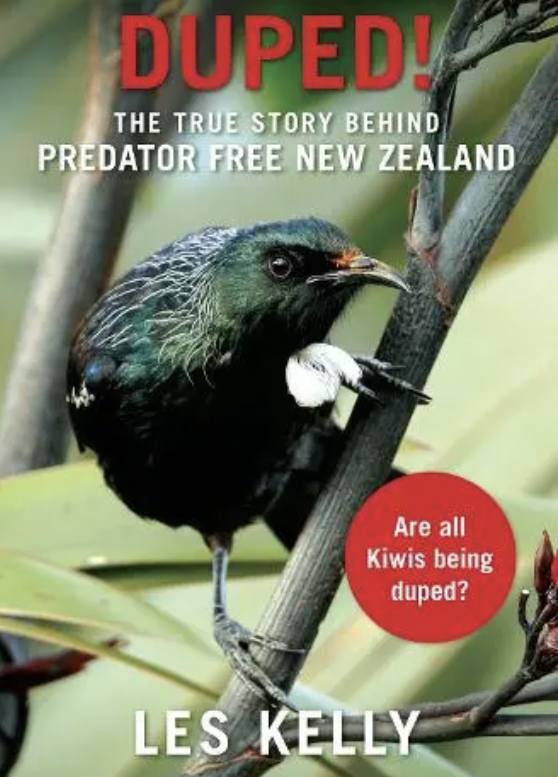
New Zealand conservationist and bushman Les Kelly reveals the shocking story behind the theft of the Predator Free New Zealand concept in this well written, easy to read and exceptionally important book.
Les Kelly is a true kiwi bushman who cares deeply about our forests, native wildlife and leaving it all better off for future generations. He and others set out to create a unifying goal that all kiwis could get behind – one that would help restore our vulnerable species without the use of harmful aerial toxins. “This is the true, 12-year story of the “original” Predator Free New Zealand (PFNZ) and its search for a safe and credible alternative to the current method of dumping tens of thousands of tonnes of a deadly toxin annually throughout mainland New Zealand for introduced-predator control.”
Read the pdf. book here. This copy is shared with permission of the Author Les Kelly.
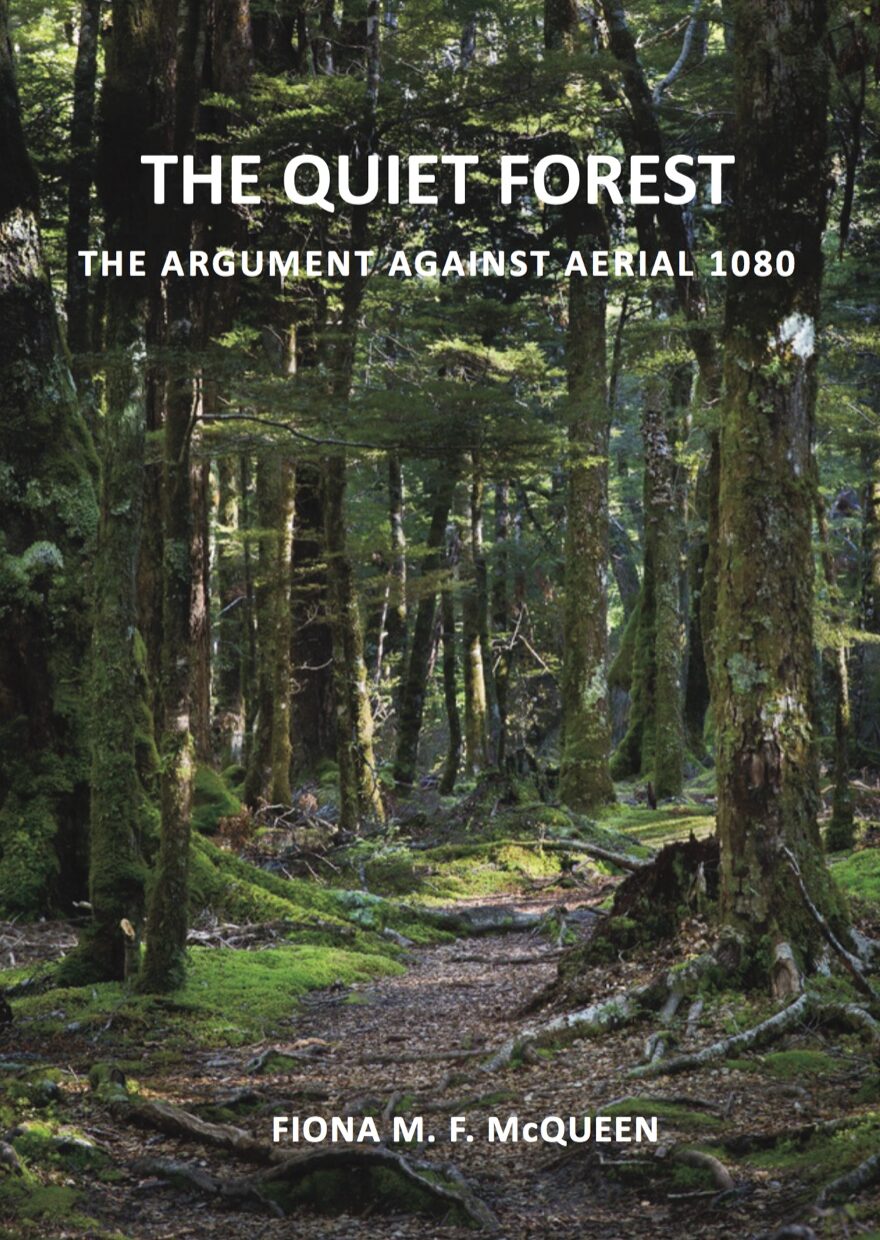
Fiona McQueen brilliantly lays bare the facts around the use of 1080 poison in New Zealand. She covers the breadth of research available from a wide range of sources, including government departments responsible for the poisoning and Kiwi communities severely impacted by endless aerial poison drops.
“Alone among nations, New Zealand allows itself to be saturated with the deadly poison 1080, which indiscriminately kills creatures that require oxygen – deer, dogs, insects, possums, fish, birds, etc. Many of these suffer horrible deaths, with the victim writhing around in pain for many hours.
Read this excellent book in pdf. format here. Also, you can visit Fiona’s website here where you can learn more about her work as a health practitioner.
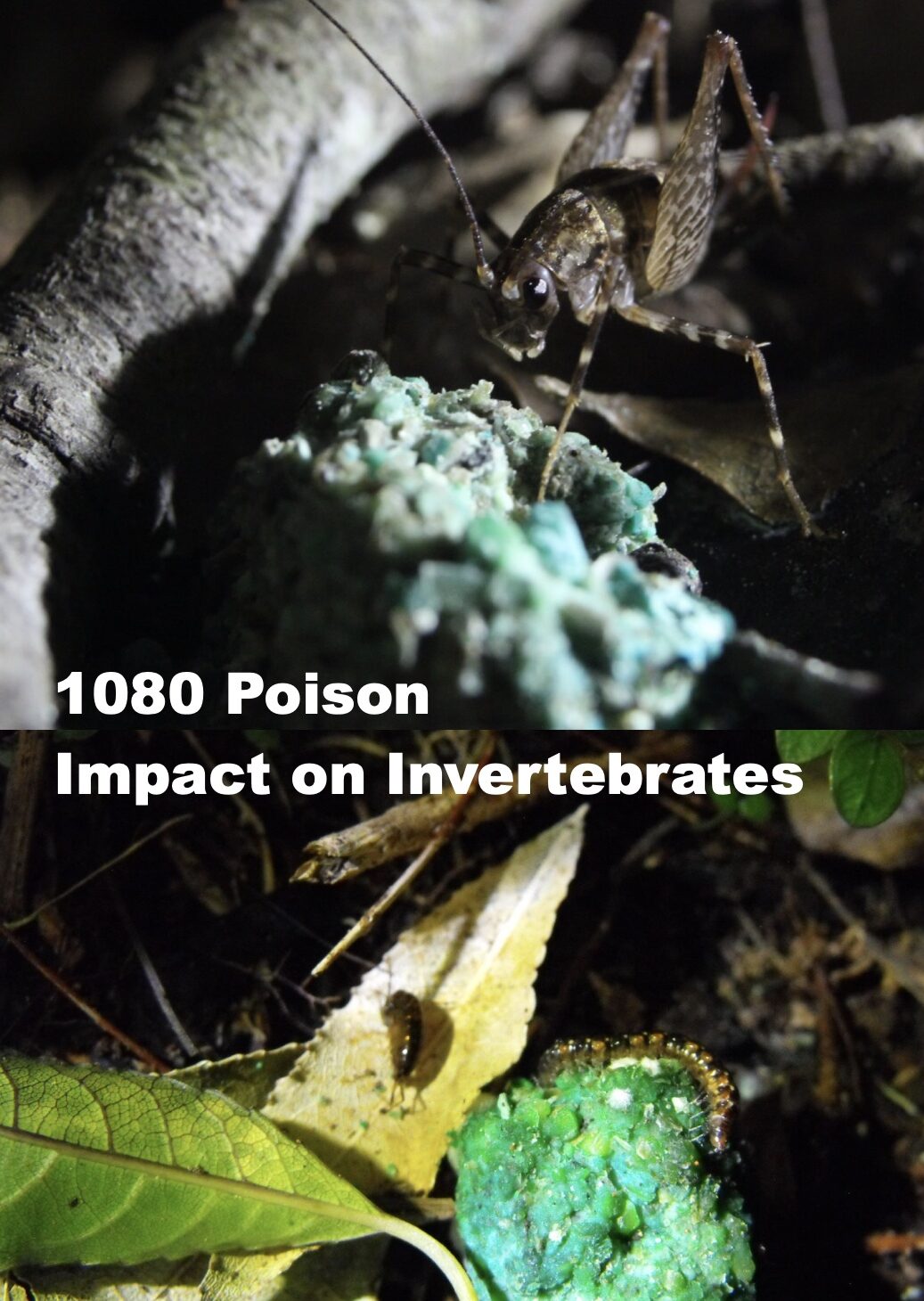
OPINION PIECE – A citizen scientist and Kiwi bushman has shared photos documenting dozens of invertebrates eating 1080 poison baits in a number of poisoned forests around the Wellington region. Spiders, weta, slugs, flatworms, beetles, bees and other insects can be clearly seen eating, or lying dead next to the highly toxic baits.
Read the full Opinion Piece by Asha Andersen. Take a look at the photographs – 1080 Poison Impact on Invertebrates.
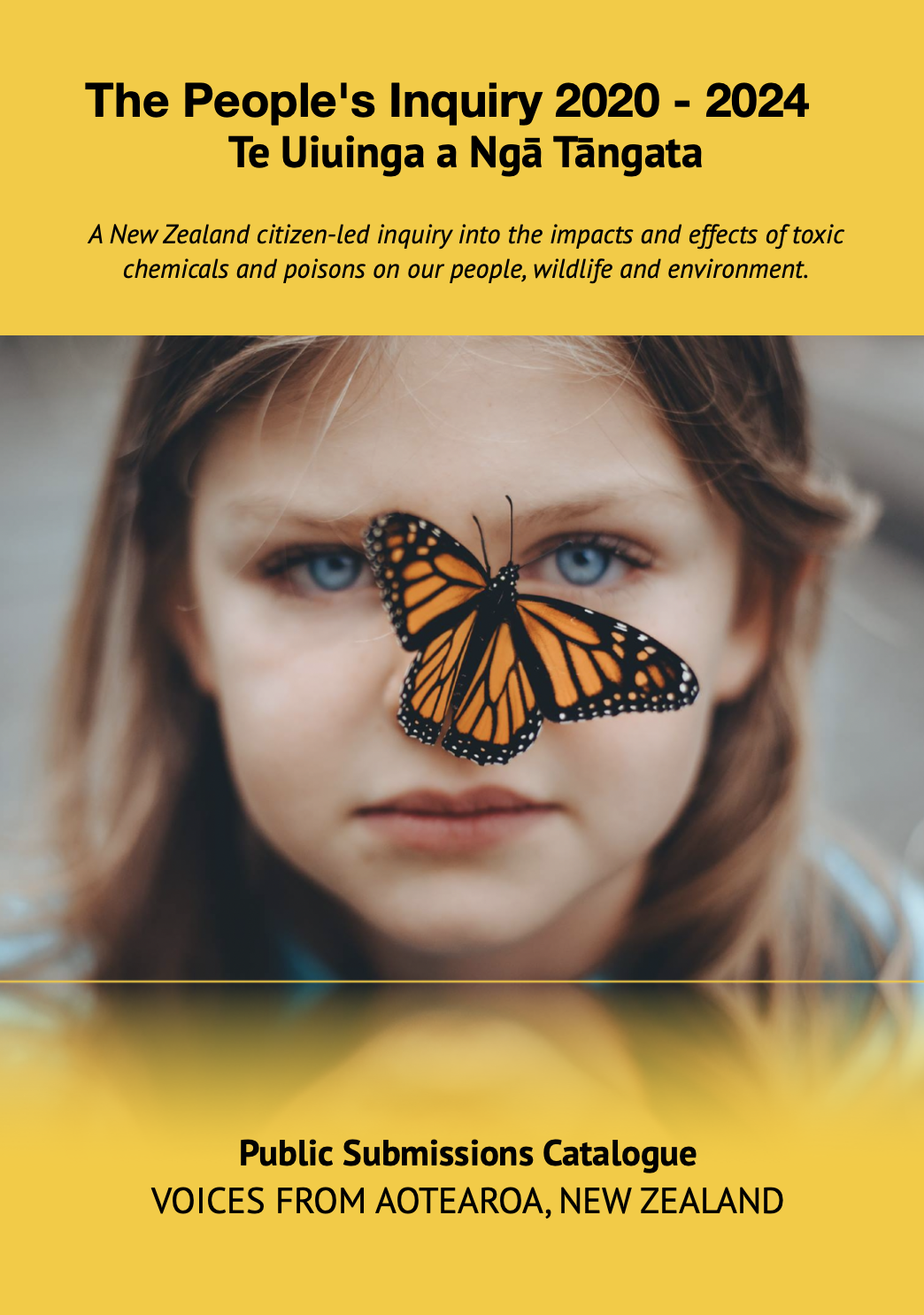
The People’s Inquiry collected submissions from those harmed by toxic chemicals and poisons, as well as scientists, researchers and health professionals. Visit the Inquiry website for links to the 3-day online hearing held in November 2021 and more information, interviews and news.
Read the Public Submissions Catalogue published April 2024. www.peoplesinquiry2020.nz

“Physicians and Scientists for Global Responsibility (PSGR) work to produce transparent, high quality science information to educate and inform the public. You might not know us – but we’ve been working on these issues for 25 years! We respond to consultations on new policy and legislation, release white papers and reports, and interview scientists and doctors whose work draws attention to complex scientific issues – that are often not easily inserted into and indeed, are often missing from, government policy.”
You can watch Frank Rowson and Jodi Bruning’s testimony to the People’s Inquiry into toxic chemicals and poisons here. PSGR have been leading voices on many important issues including Glyphosate, the Gene Technology, Digital I.D. and Fluoride. Reports and papers are available on their website. Check out there website here: https://www.psgr.org.nz
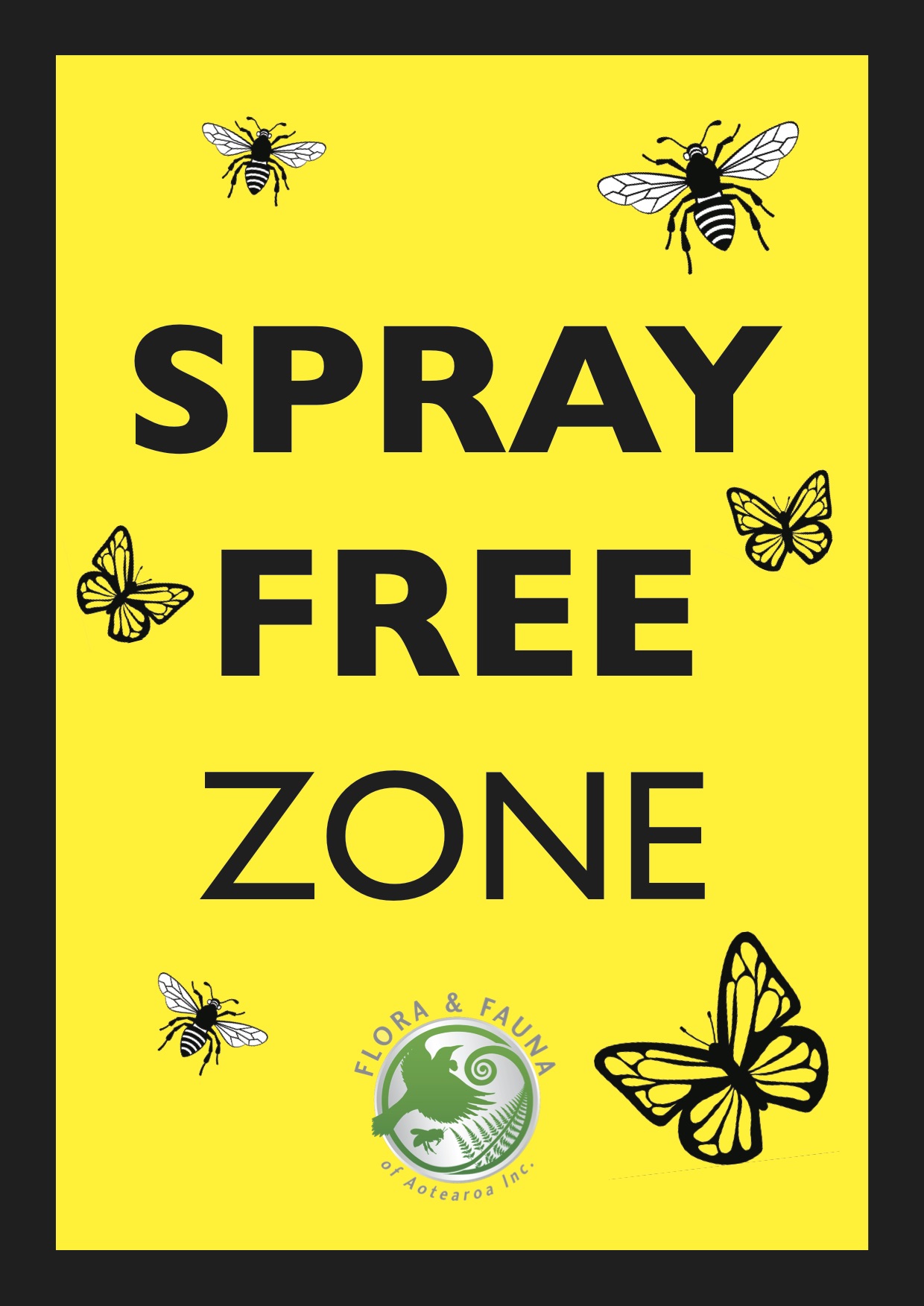
Take responsibility for your verge and plant it up for the birds and the bees. We are working on a fun initiative that the whole community can get behind. Keeping toxins out of our environment by reclaiming your roadside verge for nature! We are currently putting together a Nature’s Verge Guide to help support people to take responsibility for their verge.
Read more here about how to create a Nature’s Verge and download our Spray Free signs below. They look great printed, laminated and posted on your verge or fence.
Show your support by becoming a member and making a donation today.
Your donation will help us raise awareness and advocate for sustainable, community led conservation and environmental care.
Thank you!
Donations to:
Flora and Fauna of Aotearoa
12-3091-0037573-00
Find us on social media and Scoop